Wellness Event Facilitator
Attribute:
Share
Wellness Retreat Training
Learn Through Experience
3 Days • 3 Nights | Onsite Experiential Training
Experience it. Understand it. Learn how to create it.
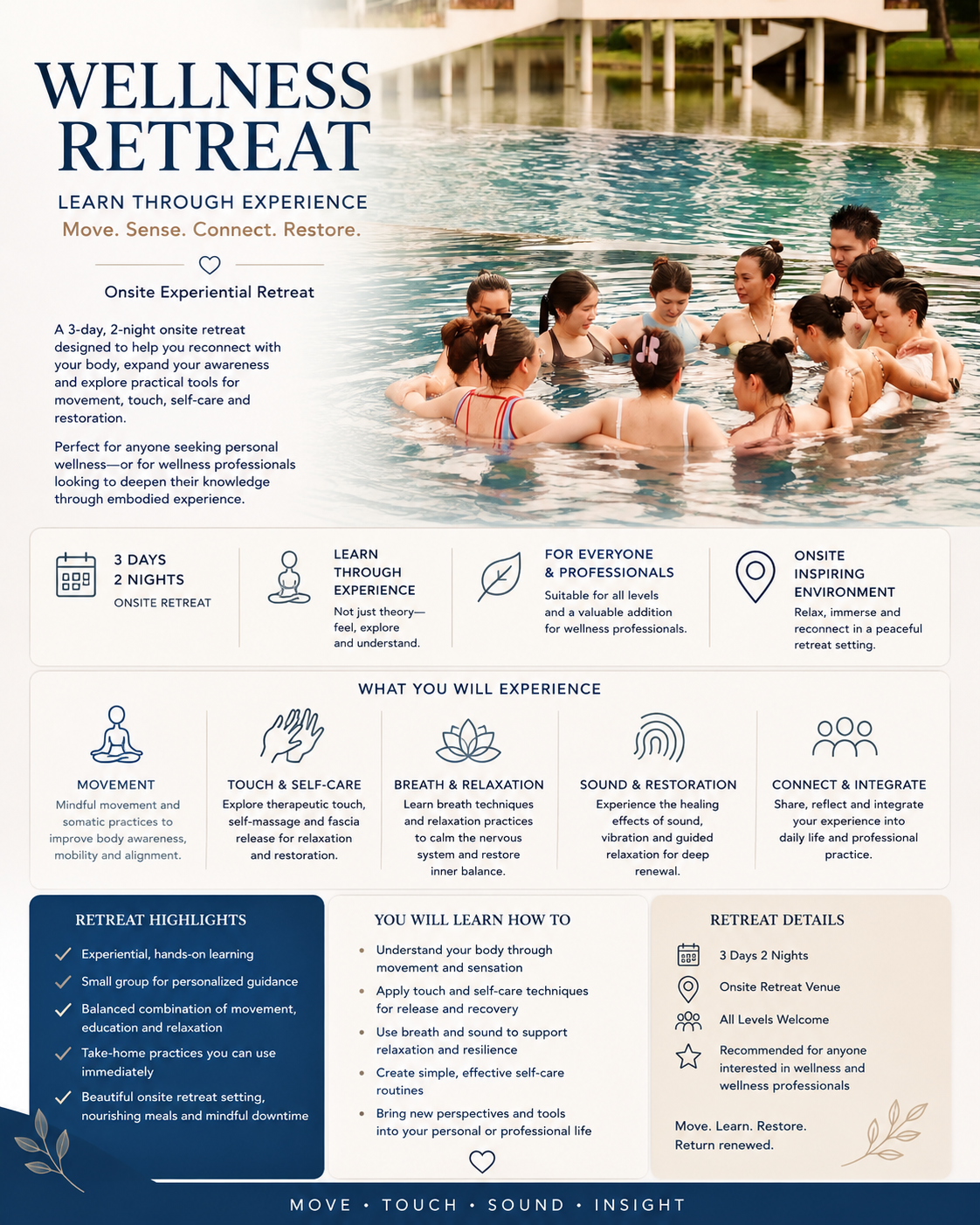
Wellness Retreat Training is an immersive residential learning experience for anyone interested in wellness, as well as movement teachers, wellness practitioners and professionals who want to understand how a meaningful wellness retreat is designed, organized and delivered.
Rather than learning retreat management through theory alone, participants experience the retreat as a guest while simultaneously learning how each activity, environment and transition contributes to the overall journey.
The program combines retreat planning, gentle yoga, natural self-care, hot–cold experiences, sound healing, group discussion and restorative practices.
Experience → Understand → Design → Facilitate → Integrate
What You Will Learn
Retreat Design & Organization
Understand the foundations of creating a wellness retreat, including:
Defining the retreat concept, purpose and target participants
Designing a balanced 3-day experience
Creating schedules and activity flow
Venue and environment considerations
Preparing spaces for movement, relaxation and group activities
Participant communication and preparation
Balancing education, activities, meals, rest and personal time
Creating meaningful opening and closing experiences
Understanding the Retreat Experience
Explore why retreats can provide a valuable setting for wellbeing, learning and connection.
Topics include the benefits of stepping away from everyday routines, the role of environment and community, balancing stimulation with restoration, creating opportunities for reflection, and helping participants take useful practices home.
3-Day Learning Journey
Day 1 — ARRIVE • CONNECT • EXPERIENCE
Creating the Retreat Environment
The first day introduces participants to the retreat from both perspectives: being a participant and observing how the experience is facilitated.
Learning topics
What makes a wellness retreat?
Retreat concept and intention
Understanding your participants
Designing the guest journey
Creating welcoming spaces
Opening circles and group connection
Retreat schedule and activity flow
Experiential activities
Arrival & accommodation check-in
Welcome tea and orientation
Opening discussion forum
Gentle mobility & mindful movement
Introduction to breath and relaxation
Sunset Gentle Yoga Flow
Group dinner
Evening sound relaxation
Reflection: What made you feel welcomed, comfortable and connected?
Day 2 — MOVE • EXPLORE • RESTORE
Creating the Wellness Experience
Day 2 focuses on learning how individual wellness activities can be thoughtfully combined into a complete retreat day.
Gentle Yoga Flow
Learn how to structure and guide an accessible gentle yoga session.
Explore:
Centering and arrival
Breath-led movement
Simple mobility
Gentle standing and floor sequences
Transitions and pacing
Relaxation and closing
Adapting the experience for different participants
Natural Wellness & Self-Care
Explore simple natural approaches that can become part of the retreat experience, such as:
Natural body-care rituals
Herbal and aromatic experiences
Simple self-massage and sensory practices
Mindful rest
Creating a home-spa experience
The emphasis is on accessible wellness experiences rather than medical treatment.
Hot–Cold Wellness Experience
Experience how warm and cool environments may be incorporated into a wellness program with appropriate screening, supervision, gradual exposure, hydration and recovery.
The focus is on understanding participant experience, comfort, safety and retreat programming, rather than extreme temperature challenges.
Sound Healing & Deep Relaxation
Explore the fundamentals of creating a restorative sound experience through:
Preparing the environment
Comfortable restorative positioning
Breath and settling
Introduction to sound instruments
Listening and sensory awareness
Creating a simple sound journey
Transitioning participants back from relaxation
Evening Discussion Forum
Participants reflect together on:
What did we experience—and why was it included?
The group examines sequencing, timing, facilitation, participant comfort and how different activities contributed to the overall retreat experience.
Day 3 — DESIGN • FACILITATE • INTEGRATE
From Participant to Retreat Creator
The final day transforms experience into practical retreat-development skills.
Learning topics
Building your retreat concept
Creating a 3-day itinerary
Selecting complementary activities
Timing and transitions
Balancing active and restorative sessions
Facilitator roles and responsibilities
Preparing participants before arrival
Creating activity stations and wellness spaces
Working with other practitioners
Closing and participant follow-up
Practical Project — Design Your Retreat
Participants create a simple wellness retreat concept including:
Theme → Audience → Venue → Activities → Daily Flow → Guest Experience
Each participant or small group presents their concept during the final discussion forum.
The program concludes with gentle movement, reflection and a closing circle.
3 Nights — The Residential Experience
Accommodation is an important part of the training rather than simply a place to sleep.
Staying onsite allows participants to experience how arrival, surroundings, meals, activities, personal time, evening rituals and morning practices work together to create a cohesive retreat.
Accommodation is included for 3 nights, together with scheduled retreat activities. The residential format also provides opportunities for informal conversation, reflection and community connection between structured sessions.
Daily Rhythm
A typical retreat day may follow:
Morning
Mindful Morning • Gentle Yoga • Breakfast
Late Morning
Learning Session • Demonstration • Discussion
Afternoon
Lunch • Personal Time • Experiential Wellness Activity
Late Afternoon
Natural Self-Care • Hot–Cold Experience • Movement
Evening
Dinner • Discussion Forum • Sound & Relaxation
The schedule intentionally includes space to rest. A successful wellness retreat does not need to fill every hour with activities.
Training Highlights
3 Days / 3 Nights onsite experiential learning
Accommodation included
Learn how to organize and structure a wellness retreat
Experience the program from the participant’s perspective
Learn to guide a simple Gentle Yoga Flow
Explore natural wellness and self-care activities
Experience thoughtfully facilitated hot–cold wellness practices
Introduction to restorative sound experiences
Discussion forums and reflective learning
Retreat itinerary and activity-flow design
Practical retreat-design project
Small-group experiential learning
Who Is It For?
Open to all levels and suitable for anyone interested in experiencing wellness more deeply.
It is also designed for yoga and movement teachers, wellness practitioners, retreat facilitators, hospitality professionals, wellness-tourism professionals and business owners who want practical insight into developing wellness experiences for their own communities, venues or services.
No previous retreat-facilitation experience is required.
Wellness Retreat Training
Move • Experience • Connect • Create
An educational and experiential wellness program. Activities are designed for general wellbeing and are not intended as medical diagnosis or treatment.